
Autism, Gender Identity and Pride: What Neuroqueering Can Teach Us
As June comes to a close, I’ve been thinking about the different kinds of pride this month holds.
For many people, June brings LGBT Pride Month: a time to celebrate queer and trans lives, honour the histories that made present-day possibilities more available and remember that visibility has often come with risk. June also includes Autistic Pride Day, on June 18, which invites a different but related kind of reflection: not simply “awareness” of autism, but respect for autistic ways of sensing, thinking, communicating, relating and moving through the world.
In my work as a psychologist, I often sit with people whose lives do not fit neatly into one category. Some are trans, nonbinary, Two-Spirit, gender-diverse or queer. Some are autistic, ADHD, otherwise neurodivergent or still trying to find the language for their experience. Many are both.
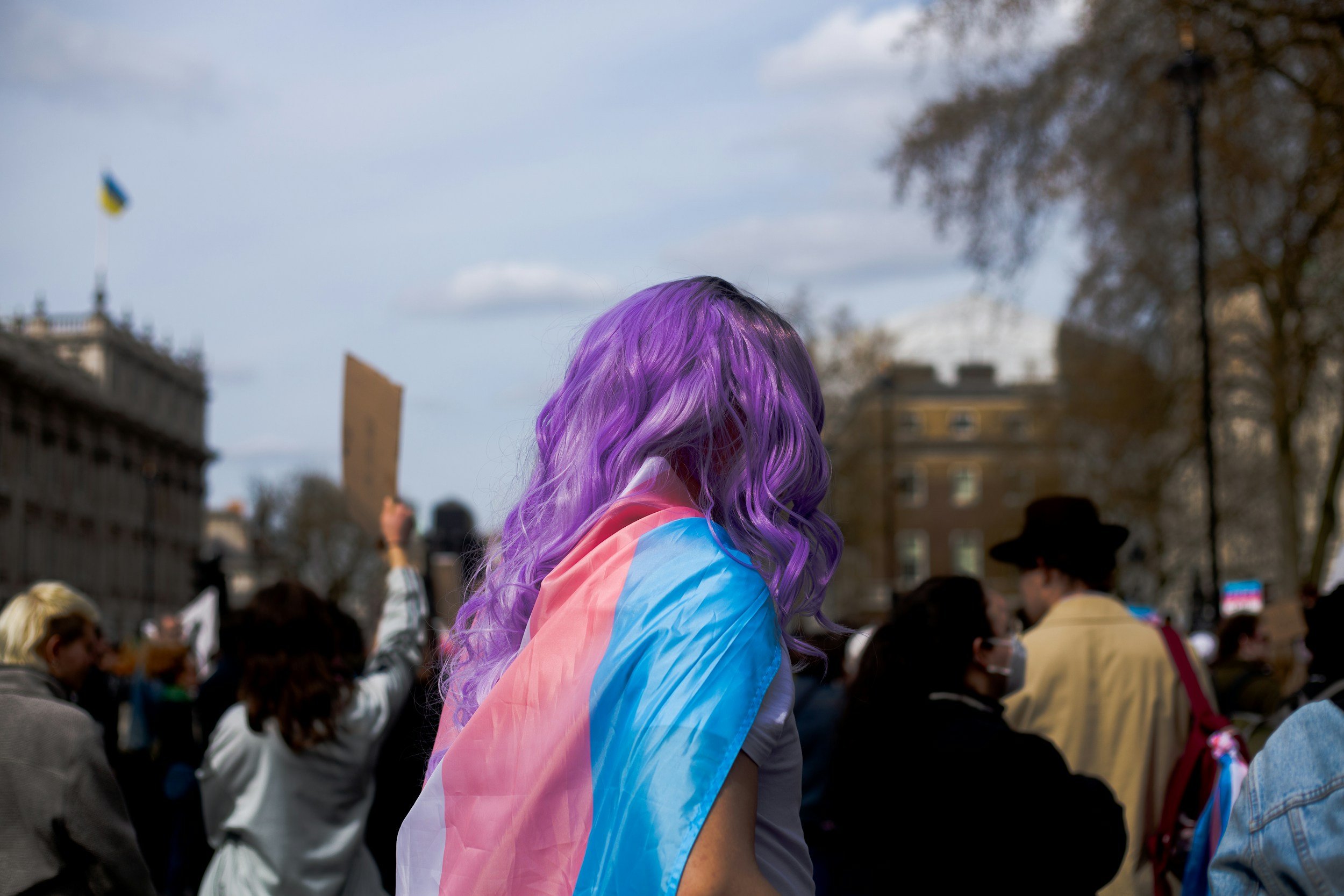
This overlap is not rare. Studies have consistently found that autistic people are more likely than non-autistic people to be gender-diverse and that trans and gender-diverse people are more likely than cisgender people to be autistic. The exact numbers vary depending on how studies are designed, who is included and how autism or gender diversity are defined. Still, the pattern is clear enough that we should no longer treat this intersection as unusual or surprising.
So why might this overlap exist?
There are several thoughtful theories and no single explanation will fit everyone. One possibility is that autistic people may have a different relationship to social norms, including gendered ones. Gender is not only an internal experience; it is also a social system and, in many ways, a social performance. It comes with scripts, expectations, rules, rewards, punishments, assumptions and performances. Some of these rules are spoken clearly. Many are not.
Autistic people may be more likely to notice these rules as rules. Or they may not automatically absorb them in the same way allistics — non-autistic people — do. Or they may look at them and think, quite reasonably: “Wait. Why?” Why does this behaviour “belong” to one gender? Why is this way of dressing, speaking, sitting, loving or existing treated as natural for some people and unacceptable for others? Why is everyone acting as though this is obvious?
Autistic people are so often unfairly described as “rigid,” but when it comes to gender norms, it is worth asking: who is actually being rigid here?
Sometimes, what gets called rigidity is a refusal to accept arbitrary rules without explanation. Sometimes, what gets called social difficulty is a very clear perception that the social script does not make sense. And sometimes, questioning gender norms is not confusion at all. It is seeing the matrix.

Many autistic people also spend years masking: suppressing movements, hiding distress, imitating social expectations, pushing through sensory overload and performing a version of themselves that others find easier to understand. Trans and gender-diverse people are often pressured to mask too, though in different ways: to make gender legible, consistent, respectable, binary or convincing enough to be believed.
For autistic trans people, these pressures can pile up quickly. A person may be navigating gender dysphoria, sensory overload, social exhaustion, trauma, family expectations, medical systems and the constant work of being interpreted by others.
This is one reason the journey of unmasking autism and the journey of gender exploration often happen together. As a person begins to ask, “What parts of me have I been performing for survival?” other questions may become possible too. What actually feels comfortable in my body? What forms of expression feel honest? Which relationships allow me to stop translating myself? What kind of life would fit me if I did not have to organize everything around being acceptable?
This brings me to one of my favourite concepts in this space: neuroqueering, a term developed by scholar, author and autistic advocate Nick Walker.
While many people use neuroqueer as an identity term, Walker emphasizes neuroqueering as a practice. It is a way of challenging neuronormativity and heteronormativity at the same time. In other words, neuroqueering invites us to question the idea that there is one correct way to have a mind, a body, a gender, a relationship, a sexuality or a life.
To neuroqueer is to resist the frameworks that teach us to pathologize difference. It asks us to notice the systems that decide which minds are considered rational, which bodies are considered acceptable, which genders are considered real and which ways of relating are considered legitimate. It asks what becomes possible when we stop treating deviation from dominant expectations as failure.
There is something deeply celebratory in that. Neuroqueering is not only critique. It is also imagination. It is the practice of making more room: for bodyminds in all their complexity, sensitive nervous systems, nonlinear genders, intense interests, atypical communication, chosen families, expansive relationships and ways of being that were never meant to fit neatly inside dominant expectations.
In therapy, this framework can be powerful. It gives people language. It can help reframe a history that has often been narrated through deficit, pathology or “too muchness.” And it can invite autistic queer and trans people to see the connections between their neurodivergence and their queerness not as a double burden, but perhaps as a kind of double clarity.
In therapy, this also means making room for complexity, wobbles, uncertainty and nuance: for exploration, for trying, for embodiment. It means not treating autism as a reason to doubt someone’s gender and not deciding in advance what someone’s path should look like. The work is to support people in moving at a pace that is thoughtful and responsive, without forcing them into narrow explanations or someone else’s timeline.
On this last day of June, I am thinking about pride as something broader than celebration. Pride can be loud, public and joyful. It can also be private, tentative and still forming.
For autistic trans and gender-diverse people, pride might look like recognizing that the problem was never having “too many” needs, too much sensitivity, too much intensity or too many questions. The problem was being asked to shrink into systems that were too small.
There is nothing wrong with wanting a life that actually fits all of you.
Dr. Jesse Bossé, D.Ps., C.Psych, is a clinical psychologist offering virtual therapy for LGBT, queer, trans, neurodivergent and autistic adults in Ontario, Québec, New Brunswick and Nova Scotia. Their work focuses on gender identity, autism, relational patterns, burnout, boundaries and building more sustainable ways of living and connecting.